What Does Beeswax Do for Your Skin? (And Why It Belongs in Your Routine)

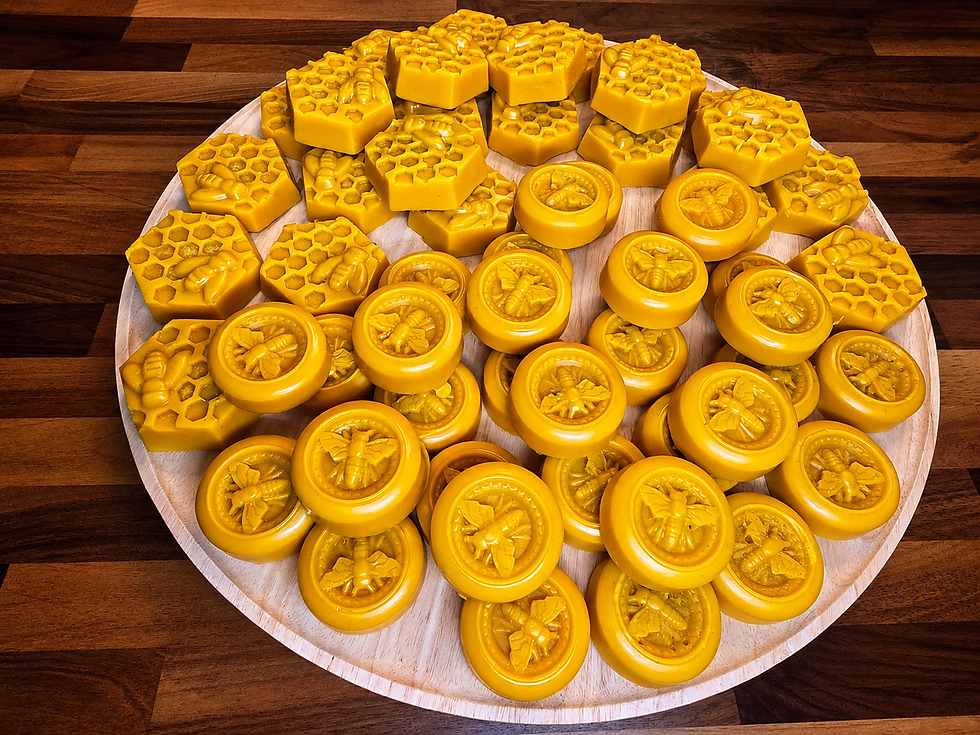
Walk into any natural beauty store and you'll spot beeswax on ingredient labels everywhere — from lip balms to lotions to body butters. But what does beeswax actually do for your skin, and why do so many clean beauty products rely on it?
Beekeeping runs four generations deep in my family. My relatives still tend hives in Moldova and Ukraine, where this tradition began. When I started my own apiary here in Franklin, NY, I brought that heritage with me — including a deep respect for everything the hive produces. Beeswax is one of those gifts, and it belongs in your skincare routine. Here's the science behind why.
What Is Beeswax, Really?
Beeswax is a natural substance secreted by honeybees to build the honeycomb in their hive. Worker bees produce it from special glands on their abdomen, and the hive uses it to store honey, pollen, and developing brood.
Pure beeswax is a complex mixture of fatty acids, long-chain alcohols, and hydrocarbons. Its molecular structure is remarkably stable, which is one reason why it has such impressive protective properties on the skin. It also has a slightly warm, honey-like scent — nothing like the synthetic "fragrance" you'll find in most commercial skincare.
At Sunshine Bees, we harvest our beeswax directly from our hives on our 33-acre farm in Franklin, NY. No bleaching, no chemical processing. Just clean, raw wax from bees we know and tend ourselves.
3 Real Benefits of Beeswax for Your Skin
1. It Locks In Moisture Without Clogging Pores
Beeswax forms a breathable, protective barrier on the surface of your skin. Unlike petroleum-based ingredients (like petrolatum or mineral oil), beeswax doesn't sit on your skin like plastic wrap — it allows your skin to breathe while still preventing moisture from escaping.
This makes it especially valuable for people with dry, cracked, or wind-chapped skin. It locks in whatever moisture is already there and keeps environmental irritants out — without contributing to breakouts.
2. It Strengthens Your Skin Barrier
Your skin barrier is the outermost layer of your skin, responsible for keeping good things in and bad things out. When it's damaged — from harsh soaps, over-exfoliation, cold weather, or inflammatory products — your skin becomes reactive, dry, and more prone to irritation.
Beeswax contains natural long-chain fatty acids that closely mimic the lipids found in healthy skin. When applied topically, it helps reinforce what's already there, supporting your skin's natural ability to repair itself rather than stripping it down and starting from scratch.
3. It Has Natural Anti-Inflammatory Properties
Raw beeswax contains trace amounts of propolis and pollen from the hive, both of which have documented antibacterial and anti-inflammatory properties. This is part of why beeswax has historically been used to soothe minor irritation, redness, and chapping.
It's gentle enough for sensitive skin and for use around the delicate eye area — which is why you'll find it in so many lip balms, eye creams, and hand salves made for people with reactive skin.
Why Synthetic Alternatives Fall Short
Many mass-market skincare products replace beeswax with synthetic alternatives like carnauba wax, candelilla wax, or petroleum-derived emollients. These substitutes can work structurally — they add texture and stability to a product — but they don't bring the same biological complexity that beeswax does.
Beeswax has been used on human skin for thousands of years. Ancient Egyptians used it in medicinal ointments. That long track record of compatibility with human biology is something a lab-created ingredient simply can't replicate.
There's also something worth noting about source transparency. When you buy a product made with beeswax from a small apiary like ours, you know exactly where it came from — right down to the county and the hive. Mass-market "beeswax" often comes from large commercial operations with little traceability.
How to Spot Real Beeswax on an Ingredient Label
Look for these names on the ingredient list — they all refer to real beeswax:
Beeswax
Cera Alba (white beeswax)
Cera Flava (yellow beeswax)
If you see "synthetic beeswax" or "beeswax substitute," that's a different product entirely — typically a blend of petroleum or plant-derived waxes that mimics the texture of beeswax without its biological properties.
Also worth noting: the higher up beeswax appears on the ingredient list, the more of it is actually in the product. Ingredients are listed in descending order by concentration, so "beeswax (Cera Alba)" listed fifth in a formula means you're getting a meaningful amount — not just a trace.
Who Benefits Most from Beeswax Skincare?
Beeswax is genuinely well-suited for almost all skin types, but it's particularly beneficial for:
Dry or dehydrated skin that needs long-lasting moisture retention
Sensitive or reactive skin that doesn't tolerate synthetic fragrances or harsh surfactants
Compromised skin barriers from over-washing, weather exposure, or irritating products
Anyone wanting simpler, cleaner ingredients without a 30-item ingredient list
Try Beeswax Skincare from Our Hives
Every lotion, lip balm, and beeswax candle we make at Sunshine Bees uses pure beeswax harvested directly from our Franklin, NY hives. No synthetic waxes, no petroleum derivatives, no ingredient lists you need a chemistry degree to understand.
My family has kept bees across two continents for four generations. The apiary I built here in the Catskills is my chapter of that story — and the wax that goes into your skincare comes straight from these hives. Shop our handcrafted lotion, lip balm, and candle collection at sunshinebeesapiary.com — and if you want a steady supply of clean, natural skincare delivered to your door every month, our Hive Club subscription was made for you.
— Natalia, Sunshine Bees Apiary | Franklin, NY


Comments