13 Honeybee Facts That Will Completely Change How You See Bees

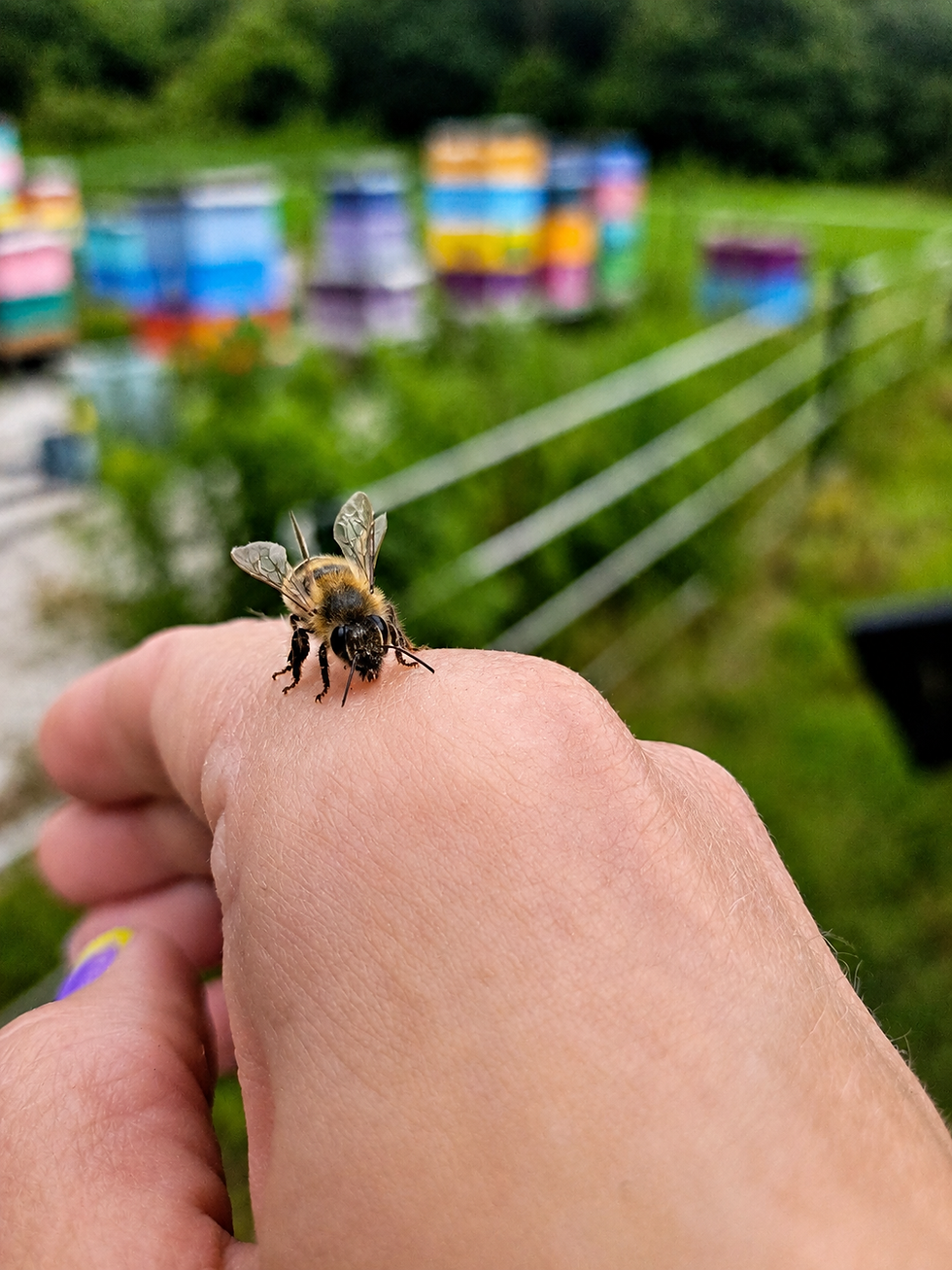
I’ve been around bees my whole life — my family has kept hives for four generations, from Moldova and Ukraine to our 33-acre farm here in the Catskills. And I still learn things about bees that genuinely stop me in my tracks.
So if you think bees are just the things you swat away at a picnic, buckle up. These little creatures are some of the most fascinating, dramatic, and frankly unhinged members of the animal kingdom.
Here are 13 facts about honeybees and honey that I genuinely love sharing.
1. Honey never expires. Ever.
Archaeologists found 3,000-year-old honey in the tombs of Egyptian pharaohs — and it was still edible. Not “maybe edible.” Actually edible. Someone reportedly tasted it.
The reason? Honey has almost no moisture, which means bacteria and mold have nothing to grow in. It’s also naturally acidic and contains tiny amounts of hydrogen peroxide. Together, these create conditions where nothing can survive — including time, apparently.
Egyptians didn’t just find honey useful — they buried it with their pharaohs as an offering for the afterlife. If you’re going to pack food for eternity, honey is not a bad choice.
2. Every worker bee you’ve ever seen is a girl.
Every single bee collecting nectar, guarding the hive entrance, building honeycomb, nursing larvae, and making honey is female. The worker bees — which make up the vast majority of the hive — are all female.
They also run the entire operation. The queen doesn’t give orders — she just lays eggs. The worker bees make every decision in the hive. So next time someone says “busy as a bee,” know that they’re talking about a very hardworking girl.
3. A worker bee dies when she stings you — and she knows it.
A worker bee’s stinger is barbed, like a fishhook. When she stings a human, it gets lodged in the skin. When she tries to fly away, the stinger — along with part of her abdomen — tears away from her body. She dies shortly after.
This means every time a worker bee stings you, it’s the last thing she does. She’s not being aggressive for fun. She’s making the ultimate sacrifice to protect the hive. So if a bee stings you, the correct response is to feel a little respected.
(The correct actual response is to scrape the stinger out sideways with a fingernail or credit card — don’t pinch it, or you’ll push more venom in.)
4. The boys don’t do anything. Literally nothing.
Male bees are called drones. They don’t collect nectar. They don’t make honey. They don’t guard the hive. They don’t even have stingers. Their one job is to mate with a queen from another hive — and if they succeed, they die immediately after.
If they don’t mate, they just hang around the hive all summer being fed by the worker bees. No foraging, no building, no nothing. Just eating and waiting.
You can actually spot them — drones are bigger than worker bees and have enormous round eyes that nearly wrap around their heads (they need them to spot queens mid-flight).
5. At the end of summer, the girls kick the boys out to die.
Every fall, as the hive starts preparing for winter, the worker bees evict every single drone. They stop feeding them, block them from re-entering, and in some cases physically drag them out. The drones, having no survival skills and no stingers to defend themselves, quickly starve or freeze.
It sounds brutal. But it makes complete sense: drones consume precious winter honey stores without contributing anything to the hive’s survival. The girls aren’t being cruel — they’re keeping the colony alive.
I watch this happen in my own hives every fall. It never gets less dramatic.
6. The queen bee’s stinger works differently than everyone else’s.
Unlike worker bees, the queen has a smooth stinger — no barbs. This means she can sting multiple times without dying. But here’s the thing: she almost never uses it on humans or predators.
Her stinger is a weapon for one specific purpose: killing rival queens. When a virgin queen emerges from her cell, she immediately hunts down any other virgin queens in the hive and stings them to death. Last queen standing wins the hive.
Once she’s mated and starts laying eggs, she almost never stings again. The hive is hers — no competition left.
7. The queen can lay up to 2,000 eggs a day.
At peak season, the queen lays up to 2,000 eggs per day — more than her own body weight. She inspects each cell with her front legs before depositing a single egg, perfectly centered, every time.
She can also choose whether to fertilize each egg as she lays it. Fertilized eggs become female workers or new queens. Unfertilized eggs become male drones. The queen controls the gender of every bee she produces.
8. Worker bees literally work themselves to death.
A summer worker bee lives about 6 weeks. She spends the first 3 weeks working inside the hive — cleaning cells, nursing larvae, building comb, processing nectar. In her last 3 weeks, she becomes a forager, flying out to collect nectar and pollen.
Foraging is brutal on a bee’s body. She flies for miles every day carrying loads almost as heavy as herself. After 500 to 700 flights, her wings literally tear apart and she can no longer fly. Many forager bees die away from the hive, unable to make it back.
So the next time you see a bee hovering in a flower — that’s probably a bee in the last few weeks of her life, still showing up to do her job. I find that genuinely moving.
9. A single jar of honey represents millions of flower visits.
A single worker bee produces about 1/12 of a teaspoon of honey in her entire lifetime. That’s it. One teaspoon requires the lifetime work of about 12 bees.
A single pound of honey requires approximately 2 million flower visits by the hive’s foragers. A standard 1-pound jar of honey represents the combined lifetime effort of thousands of bees.
Every time I open a jar of honey, I think about this. It makes it taste better, I promise.
10. Bees communicate through dance.
When a forager bee finds a great source of nectar, she returns to the hive and performs what’s called a “waggle dance” — a figure-eight movement that communicates the exact direction and distance of the food source to her sisters. The angle of the dance relative to the sun gives the direction. The duration tells the distance.
Bees have been using this system for millions of years. It’s one of the most sophisticated communication systems in the animal kingdom — and they do it in the dark, inside a hive, using only vibration and movement.
11. Honey starts as nectar and gets transformed inside the bee.
A forager bee swallows nectar from flowers into a special organ called the honey stomach — completely separate from her digestive stomach. Back at the hive, she passes it to a house bee, who chews it and passes it to another bee, who chews it again. This process adds enzymes that break down the nectar’s sugars.
The bees then spread the nectar across honeycomb cells and fan it with their wings — sometimes for days — until most of the water evaporates. When the moisture content drops below about 18%, they seal the cell with beeswax. That sealed cell is honey.
Honey is essentially bee-transformed, bee-dehydrated, bee-sealed nectar. It’s incredible that something so delicious comes from a process that complex.
12. Bees are responsible for about 1 in 3 bites of food you eat.
About one third of the global food supply depends on pollination by bees. Almonds, apples, blueberries, cherries, avocados, cucumbers, watermelons — none of these exist without bees doing their work.
A single honeybee colony can pollinate 300 million flowers in a single day. The economic value of honeybee pollination to US agriculture alone is estimated at over $15 billion annually.
Protecting bees isn’t just a nice environmental gesture. It’s protecting the food system.
13. Raw honey is a completely different product than what’s in most grocery stores.
After all that — the millions of flower visits, the transformation inside the bee, the days of fanning, the careful sealing — most commercial honey is then heated to high temperatures and ultra-filtered before it hits a grocery shelf.
That process destroys the natural enzymes, degrades the antioxidants, and removes the bee pollen — one of honey’s most nutritious components. Studies have found that much of the honey sold in US stores contains no pollen at all, making it impossible to verify its origin.
Raw honey skips all of that. It goes from the hive to the jar with nothing in between — enzymes, pollen, antioxidants, and flavor all intact. It looks different (cloudier, sometimes crystallized), tastes different (deeper, more complex), and behaves differently (it will eventually crystallize, which is actually a sign it’s real).
Once you try real raw honey, the grocery store stuff tastes like sugar water by comparison. I’m not exaggerating.
Try Raw Honey From Our Hives
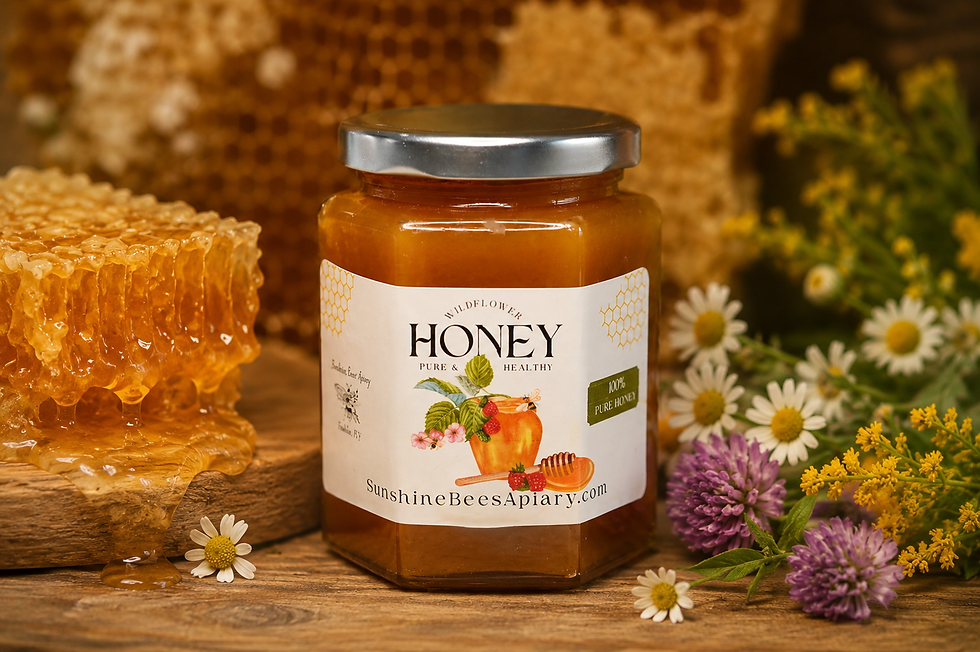
Our raw wildflower honey is harvested from our own hives here on our 33-acre farm in Franklin, NY. Never heated, never filtered, never blended. Just honey — the way the bees made it.
→ Shop our raw honey at sunshinebeesapiary.com
→ Join the Hive Club — our monthly subscription delivering small-batch raw honey and natural skincare straight to your door. Members get first access to limited seasonal releases.
— Natalia, Sunshine Bees Apiary | Franklin, NY

Comments