50,000 Bees, a Pandemic, and What Happened When My Grandfather Couldn’t Come


The Plan
In December of 2019, I ordered five packages of bees from an apiary in Tennessee.
The plan was simple. My grandfather — a beekeeper his entire life, the man who carried this tradition from Moldova across generations — was going to fly over and be with me when they arrived. He was going to show me how to install them into the hives. How to read the frames. How to find a queen. How to do everything I’d only read about in books and watched on YouTube videos at midnight.
He was going to be there for the beginning of it all.
Then the pandemic happened.
Borders closed. Flights stopped. My grandfather stayed in Moldova. And my bees — 50,000 of them, already packed and en route from Tennessee — kept coming.
The Phone Call
Early June, my phone rang. It was the local post office.
“Your bees are here.”
I drove to pick them up alone.
When I walked in, I could smell them before I saw them. Bees communicate through pheromones — and when they’re agitated, they release a specific scent. It’s sharp, almost metallic, somewhere between alarm and warning. The post office staff were very ready for me to take them.
Five packages. Each one a wooden box with mesh sides, carrying roughly 10,000 bees, a can of sugar water to keep them fed on the journey, and a small separate box holding the queen and a few nursing bees. The queens travel separately from the colony — caged and protected — and the worker bees spend the entire trip getting used to her scent, slowly accepting her as their own.
I loaded all five boxes into my car and drove home. It was one of the strangest drives of my life.
Terrified
Here is what I knew, standing in front of five boxes of 10,000 bees each:
I had to open them.
There was no other option. The bees had been traveling for days. They needed to get into the hives. My grandfather wasn’t coming. No one was coming. It was just me, five boxes of unhappy bees, and five empty hives waiting in a field.
I put on my full suit. Gloves, veil, everything. I checked the zipper three times.
And then I opened the first box.
I won’t pretend I wasn’t terrified. I was. Every class I’d taken, every video I’d watched, every book I’d read — none of it had prepared me for the reality of standing in front of a buzzing, vibrating, very much alive box of 10,000 bees and being the only person responsible for what happened next.
But I did it. Slowly, carefully, one box at a time. All five colonies went into their hives. I closed everything up, stepped back, and felt something I hadn’t expected:
Absolute, overwhelming excitement.
The Week That Broke Me (Briefly)
A week later, I went back to check on them. The most important thing to verify after installing a new package is whether the colony has accepted their queen. Without a queen, a hive cannot survive. She is everything — the only bee that lays eggs, the center around which the entire colony organizes itself.
I went through all five hives.
I couldn’t find a single queen.
Not one. In any hive.
I was devastated. I sat in a diner with a friend that evening, staring at my coffee, convinced I had somehow lost all five queens in my first week. I was already calculating — I need to order five replacement queens. How fast can they ship? How much does that cost? Can the hives survive long enough?
I went home and barely slept.
What I Learned the Next Morning
The next day I made a decision. Before I ordered anything, I was going to go through every single hive one more time. Slowly. Frame by frame. Taking my time.
I found all five queens.
They had been there the entire time. I just didn’t know what I was looking for yet. A queen looks different from a worker bee — she’s longer, moves differently, and the bees around her orient toward her in a specific way — but to an inexperienced eye, in a frame covered with thousands of moving bees, she is incredibly easy to miss.
All those classes I’d taken had given me great information. But standing in front of a real hive with real bees was a completely different thing. Nothing truly prepares you for it except doing it. Over and over again, until your eyes know what to look for and your hands stop shaking when you lift a frame.
I marked all five queens that day. Painted a small dot on each one so I’d never lose her again.
And I exhaled for what felt like the first time in a week.
Five Years Later
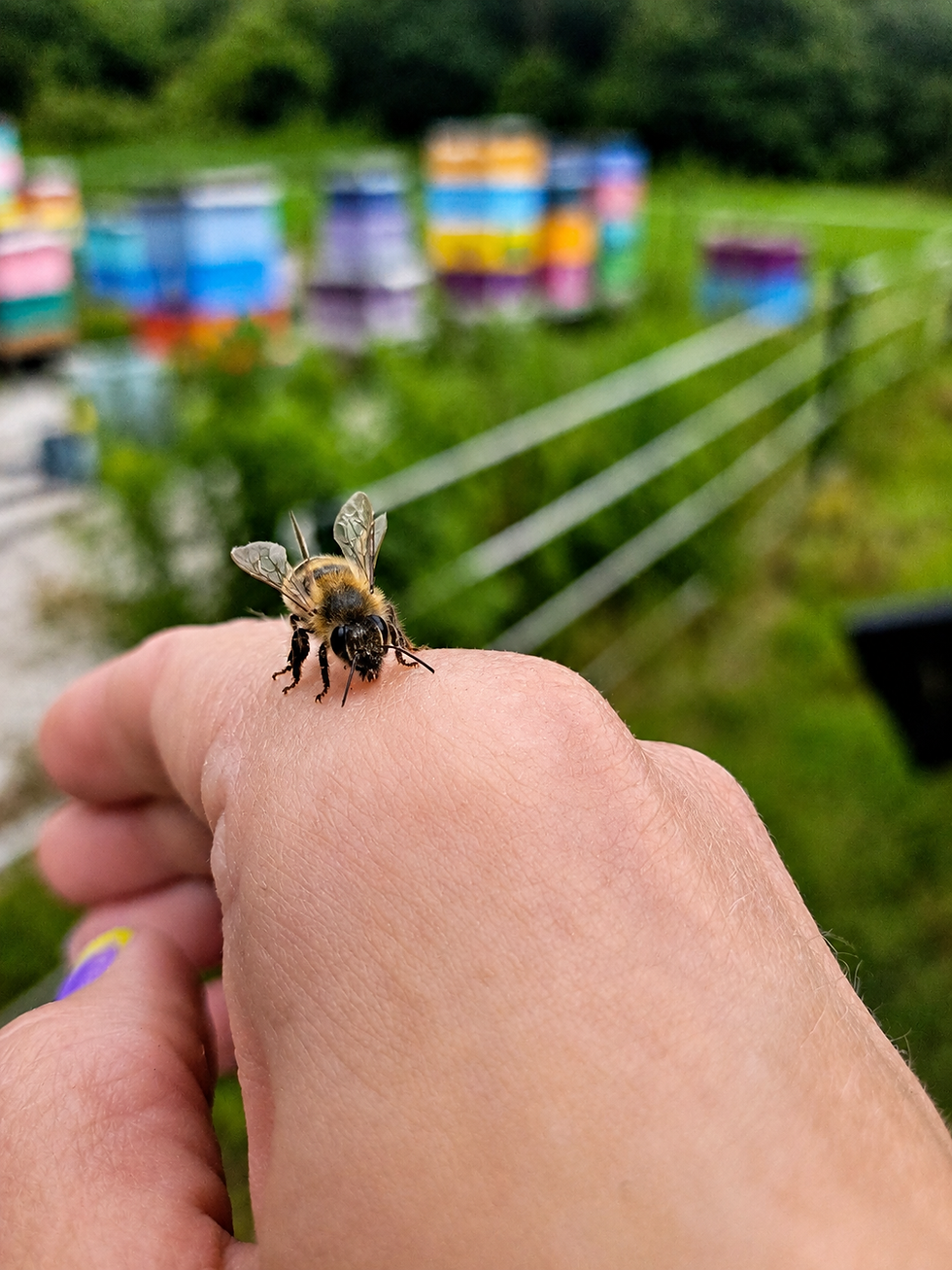
I’ve been keeping bees for five years now. I learn something new every single time I open a hive. That part never changes — and I hope it never does.
Beekeepers talk about something called the “beekeeping high.” For a long time that phrase made me smile — it sounded almost too poetic to be real. But I understand it completely now. There are moments when I’m working through a hive with 60,000 bees moving around me, and I fall into such a complete state of focus and calm that the rest of the world disappears entirely. I’ve looked up from a frame to find a deer standing just a few feet away, watching me. I hadn’t heard it come. I hadn’t noticed anything except the bees.
It is one of the most peaceful things I have ever experienced. Sixty thousand bees. Complete stillness inside.
My grandfather never made it for that first installation. But we talk about the bees every time we speak. He asks about the hives, the honey, the queens. Four generations of this family have kept bees — his hives are still active in Moldova — and now mine are here on 33 acres in the Catskills.
The pandemic took a lot of things. But it couldn’t take this.
Taste What These Hives Produce
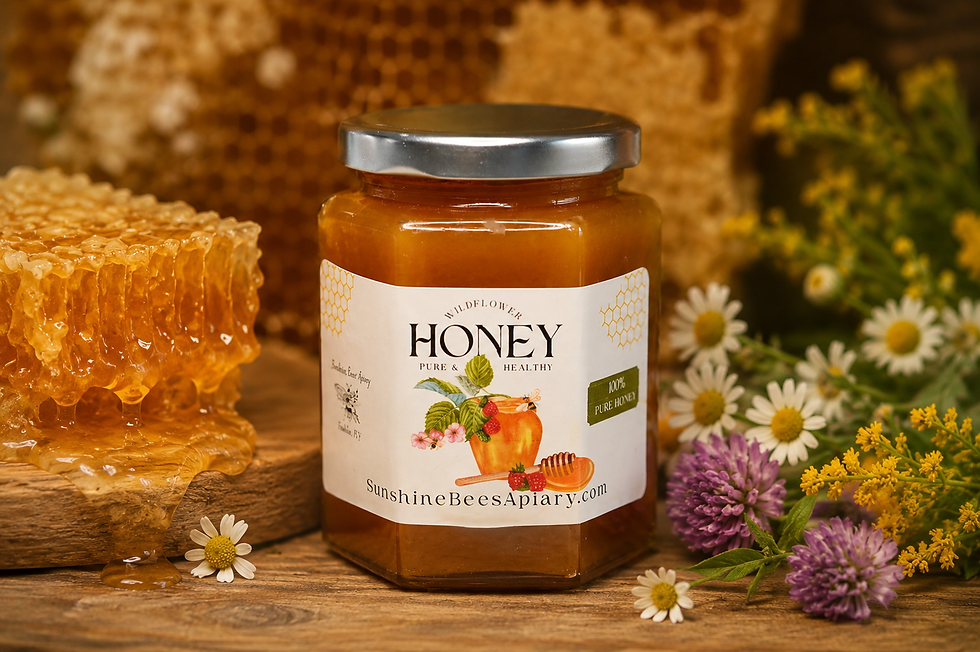
Every jar of raw honey from Sunshine Bees Apiary comes from these hives — the same colonies that started with five panicked packages from Tennessee and a beekeeper who figured it out alone. Small batch, never heat-treated, harvested by hand on our Franklin, NY farm.
→ Shop our raw honey at sunshinebeesapiary.com
→ Join the Hive Club — our monthly subscription delivering small-batch raw honey and natural skincare straight to your door.
— Natalia, Sunshine Bees Apiary | Franklin, NY
Comments