What Are My Bees Doing Right Now? A Peek Inside the Hive as Fall Hits the Catskills

I stepped outside this morning and felt it — that first real bite of fall in the air. The goldenrod is starting to fade, the mornings are cool, and the days are getting shorter fast. If you’re in upstate New York right now, you know exactly what I’m talking about.
And out at my hives? Things are getting serious.
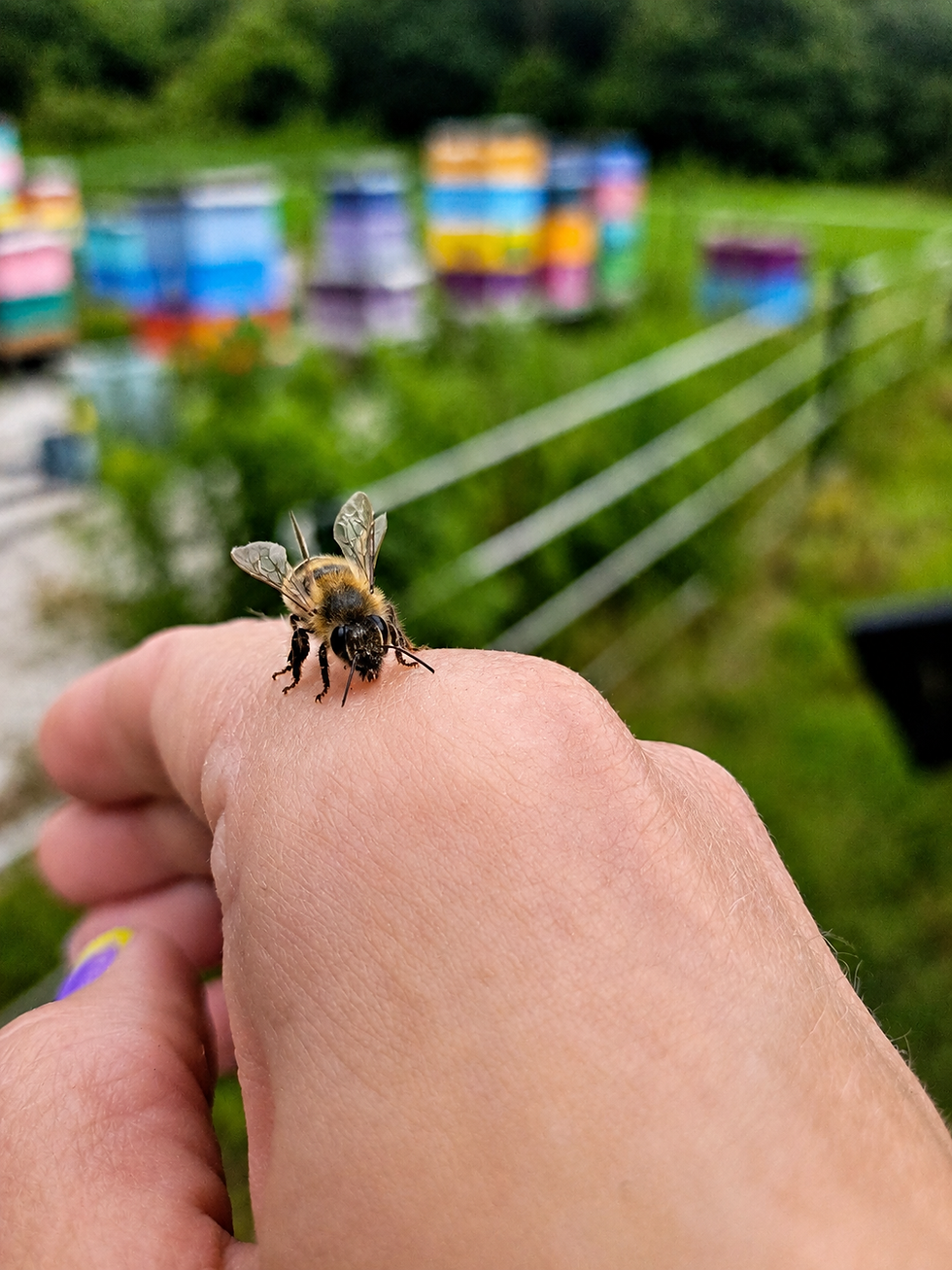
I get asked a lot — what do the bees do in winter? Do they hibernate? Do they leave? Where do they go? The answer is actually one of the coolest things in nature, and it’s all happening right now on my 33 acres here in Franklin, NY. So let me take you inside the hive.
They’re in a Race Right Now
Here’s something most people don’t realize: in upstate New York, bees have until about the first week of October to collect nectar. After that, the flowers are done and there’s nothing left to forage. So right now, every single bee that can fly is out there making the most of these last warm days.
A healthy hive needs somewhere between 60 and 90 pounds of stored honey to make it through a Catskills winter. That’s a lot of honey. And it’s the difference between a colony that makes it to spring and one that quietly starves in January when there’s absolutely nothing I can do to help them.
When I check my hives this time of year, I’m basically weighing them in my head. How heavy do they feel? How many frames are capped? Are they bringing in enough? It’s like watching someone pack for a very long, very cold trip and making sure they don’t forget anything.
What They’re Actually Eating Right Now
People always ask me what makes our fall honey taste different from the spring honey. The answer is literally right outside your window if you’re in the Catskills right now.
Goldenrod — the MVP of fall
See those bright yellow flowers lining every road and field right now? That’s goldenrod — and my bees are absolutely obsessed with it. It’s their main food source all through September. The honey they make from goldenrod is darker, bolder, with this slightly spicy, almost licorice-like flavor that’s completely different from our lighter spring honey.
Here’s something cool: goldenrod is packed with flavonoid antioxidants — quercetin and kaempferol — that researchers have studied for their anti-inflammatory properties. Some studies have found goldenrod has more antioxidants than green tea. When the bees make honey from goldenrod nectar, those plant compounds carry over into the honey. So that dark amber fall honey is doing more for you than just tasting good.
Funny side note: goldenrod nectar smells absolutely terrible before it becomes honey. I’m talking sharp, sour, almost rotten. I can smell my hives from a hundred feet away in September. My first year keeping bees I walked out one morning and genuinely thought something had died in one of my hives. Nope. Just goldenrod season. You get used to it.
Asters — the last gift of the season
Those little purple and white wildflowers taking over the roadsides right now? Asters. They bloom right as the goldenrod fades, and they’re one of the last things my bees can forage before the frost shuts everything down. Aster honey is completely different from goldenrod — very light in color, almost white, and much more delicate and sweet.
When goldenrod and aster nectar mix together in the hive — which is what’s happening right now — you get this beautiful complex late-season wildflower honey that honestly has more going on nutritionally than almost any single-source honey. More antioxidants, more diversity, more flavor. It’s one of my favorite things about fall.
Why fall honey is darker — and that’s a good thing
If you’ve ever noticed that our fall honey looks darker than our spring jars, that’s not a quality issue — it’s actually the opposite. Darker honey generally means more antioxidants. The goldenrod, asters, buckwheat, and late clovers that bloom in fall produce a richer, more nutritionally complex nectar than spring flowers. Your fall jar is working harder for you than it looks.
The Girls Kick the Boys Out (And I Love Watching It Happen)
Okay this is one of my favorite parts of fall beekeeping to explain to people.
Remember the drones — the male bees who spend all summer doing basically nothing? Eating the hive’s honey, waiting around, not foraging, not building, not doing anything useful? Fall is when the worker bees settle that score.
When temperatures start consistently dropping below 50°F, the worker bees stop feeding the drones and physically drag them to the hive entrance and push them out. No stinger needed. The drones, who have zero survival skills and can’t forage or re-enter the hive, don’t last long outside.
I know it sounds harsh. But think about it — every drone still inside the hive is eating honey the colony needs to survive winter. When his season is done, he’s a liability. The girls are not sentimental about this, and honestly? Good for them.
I actually check for this when I’m at my hives in fall. When I see drones being evicted at the entrance, I know winter is really coming. It’s one of the clearest signals the bees give me.
Meet the Winter Bees — They’re Built Different
Here’s something I didn’t know when I started keeping bees that completely blew my mind: the bees that survive winter are literally physically different from summer bees.
Summer worker bees live about 6 weeks. They work themselves to exhaustion and their bodies just wear out. But starting in late August, the queen starts laying eggs that will hatch into what beekeepers call “winter bees.” These bees have larger fat bodies, different physiology, and can live 4 to 6 months instead of 6 weeks. They’re basically built specifically to hunker down and survive the cold.
The bees hatching from cells in my hives right now are probably winter bees. They’re the ones who will still be alive in March. They’re the ones who will greet spring. I find that genuinely incredible every time I think about it.
How They Survive a Catskills Winter
So here’s the answer to the question I get asked most: no, honeybees don’t hibernate. They don’t leave. They don’t go anywhere.
When it gets consistently cold — below 50°F, which in the Catskills usually happens in late October and into November — the entire colony pulls together into what’s called a winter cluster. Picture tens of thousands of bees forming a tight ball around the queen. The bees on the outside lock their bodies together like an insulating shell. The bees on the inside vibrate their flight muscles non-stop to generate heat.
They’re not flying. They’re not foraging. They’re just vibrating and eating honey and keeping each other alive.
And here’s the wild part: the core of that cluster stays between 77°F and 93°F — even when it’s -10°F outside. Sixty thousand bees, burning honey for fuel, keeping their queen at nearly tropical temperatures while a Catskills winter does its worst outside those wooden hive walls. I’ve always thought that’s one of the most remarkable things in nature.
They slowly move through the hive all winter, shifting from frame to frame as they eat through their honey stores. On the warmer days — anything above 50°F — some bees will take what we call cleansing flights. Honeybees will not go to the bathroom inside the hive. Even in January, they hold on until there’s a warm enough day to fly out briefly. This is one of the reasons long stretches of Catskills cold can be really hard on them — sometimes it stays below 50°F for weeks and they just have to wait it out.
What I’m Doing at My Hives Right Now
This time of year I’m out at my hives a lot. There’s a mental checklist I run through every visit:
Honey stores. Do they have enough to get to April? If not, I can still feed them heavy sugar syrup — but once it gets consistently below 50°F, they stop taking it. The window closes fast.
The queen. Is she still laying? Is the brood pattern healthy? A hive that goes into winter without a strong queen or without winter bees being raised is in real trouble.
Mite levels. Varroa mites are honestly the biggest threat to my hives here in New York. September is the last realistic window to treat if numbers are high. I check every hive.
Ventilation. Moisture is just as dangerous as cold for a winter cluster. If a hive can’t breathe, condensation builds up and drips down onto the cluster and chills them. I make sure there’s a small upper entrance before I close things up.
Winter wrapping. Before the serious cold hits I wrap my hives in roofing felt. It doesn’t keep them warm — the cluster does that — but it cuts the wind chill on the hive walls and helps them burn a little less honey just staying warm.
And Then I Wait
Once the hives are wrapped and winter really sets in, there’s not much I can do. I check the weight of each hive every few weeks — a lighter hive in February means they’re running low and I can slide a sugar board in through the top. And on quiet days I’ll press my ear against the side of the hive and just listen.
If I hear that soft, steady hum — sixty thousand bees vibrating together inside — I know they’re alive. That sound is everything in February.
Beekeeping in winter taught me something I didn’t expect: how to let go. You do everything you can in fall, and then you trust what you’ve built. The bees have been doing this for millions of years. They don’t need me to worry about them. They just need me to have done my job well enough in September and October.
The moment I look forward to more than anything all year is the first warm day in March — that first day where it gets up around 45 or 50 degrees — when I walk out to my hives and see the first bees flying again. After months of silence, that buzz stops me in my tracks every single time.
It means they made it. And we get to do it all again.
The Honey They’re Working So Hard For
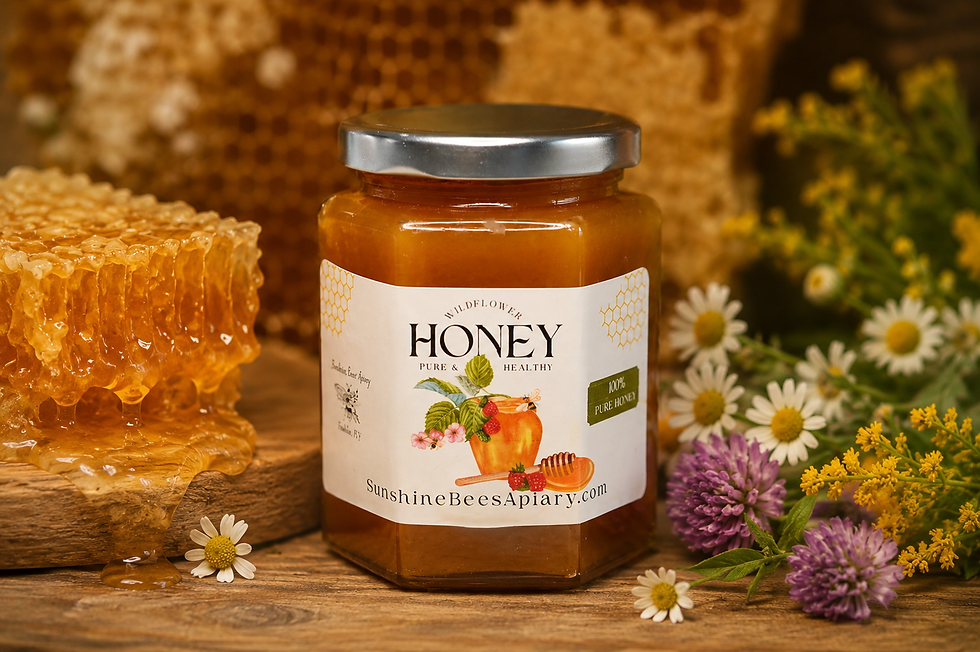
The raw wildflower honey in our shop right now carries everything that’s blooming on these 33 acres in September — goldenrod, asters, the last wildflowers of the Catskills season. Never heated, never filtered. The antioxidants, the pollen, the enzymes — all exactly as the bees made it. This is the surplus from what they’re building right now. The rest goes into the hive for winter.
→ Shop our raw Catskills wildflower honey at sunshinebeesapiary.com
→ Join the Hive Club — monthly small-batch honey and natural skincare delivered right to your door. A perfect way to stay connected to the hive all winter long.
— Natalia, Sunshine Bees Apiary | Franklin, NY

Comments